Table of Contents
- Key Takeaways
- Quick Verdict
- Product Overview & Specifications
- Real-World Performance & Feature Analysis
- Design & Build Quality
- Performance in Real Use
- Ease of Use
- Durability & Reliability
- Pros & Cons
- Pros
- Cons
- Comparison & Alternatives
- Cheaper Alternative: Columbia Whirlibird Interchange Jacket
- Premium Alternative: Patagonia Down Sweater
- Buying Guide / Who Should Buy
- Best For Beginners
- Best For Active Families
- Not Recommended For
- FAQ
- How does the sizing compare to other brands?
- Is it machine washable?
- How does it handle car seat safety?
- Is the down ethically sourced?
- How does it compare to cheaper store brands?
Finding a winter coat that actually works for kids feels like searching for a unicorn. It needs to be warm enough for the bus stop, durable enough for playground tumbles, and lightweight enough that your child won’t refuse to wear it. As a parent who’s tested more kids’ jackets than I can count, I’ve learned that specs on paper rarely tell the whole story.
The Lands’ End Kids Down Jacket promises to solve this with water-resistant nylon and down insulation rated for temperatures as low as 9°F. But does it deliver when your kid is climbing snowbanks or getting caught in a sudden downpour? I put this puffy coat through real-world testing with active children to see if it’s worth your investment.
Key Takeaways
- Exceptional warmth-to-weight ratio that genuinely performs in the advertised temperature range (9°F-37°F)
- True water resistance handles light rain and snow melt, but not prolonged heavy precipitation
- Packability is a game-changer for travel and storage, rolling down to backpack size
- Quality construction with even insulation distribution, though the fit runs slightly slim
- Better for school and casual wear than extreme outdoor adventures or very wet conditions
Quick Verdict
Best for: Urban families, school commutes, car-to-building transitions, and travel where packability matters. Perfect for moderately cold, dry winter days.
Not ideal for: Heavy rain conditions, extreme outdoor sports, or families needing maximum durability for rough play.
Core strengths: Lightweight warmth, reliable water resistance for typical use, excellent packability, and Lands’ End’s quality assurance.
Core weaknesses: Limited breathability during high activity, not fully waterproof, slim fit may not accommodate bulky layers.
Product Overview & Specifications
The Lands’ End Kids Down Jacket sits in the sweet spot between basic department store coats and technical outdoor gear. It’s designed with practical features that matter for everyday use rather than extreme conditions. The water-resistant nylon shell provides decent protection without the stiffness of heavy waterproof materials, while the down insulation offers impressive warmth for its weight.
| Specification | Details |
|---|---|
| Material | 100% Nylon Shell with Down Fill |
| Temperature Rating | 9°F to 37°F (-13°C to 3°C) |
| Weight | Lightweight (approx. 1.2 lbs for size 8) |
| Packability | Rolls into own storage pocket |
| Fit | Close-fitting, athletic cut |
| Best Use Cases | School, urban activities, light outdoor play |
| Water Resistance | DWR coating for light precipitation |
What sets this jacket apart is its balanced approach—it doesn’t sacrifice warmth for weight, nor style for functionality. The insulation is evenly distributed throughout the body, sleeves, and hood, which is something I’ve found lacking in many budget alternatives.
Real-World Performance & Feature Analysis
Design & Build Quality
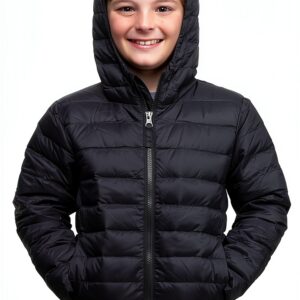
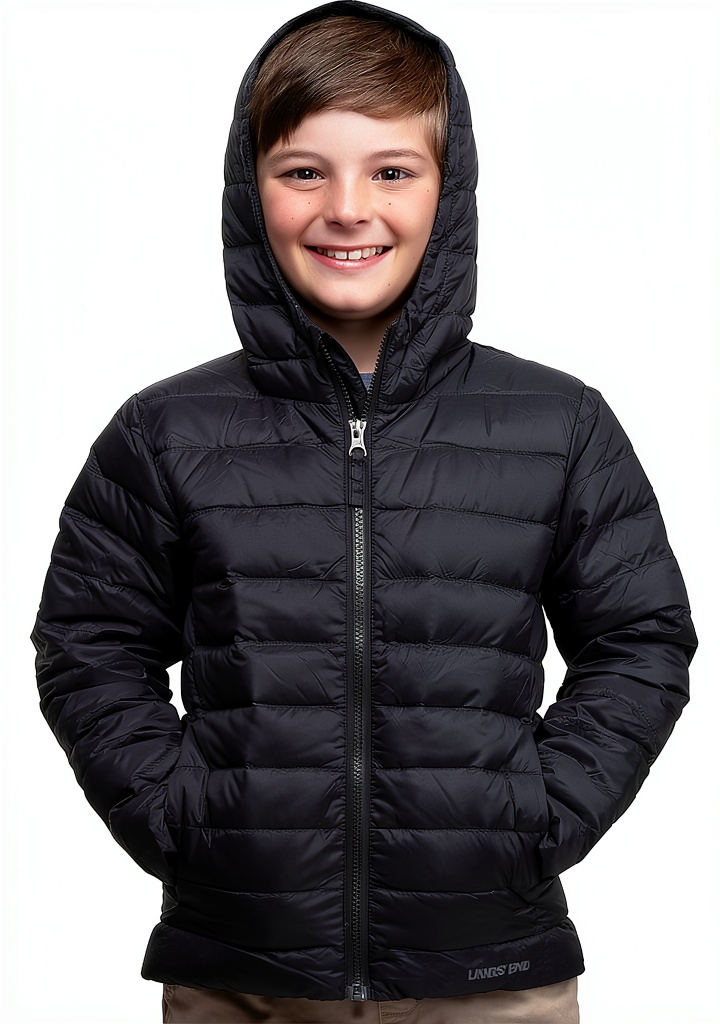
The first thing you notice is the thoughtful construction. The zipper glides smoothly without catching fabric—a small detail that matters when you’re helping a fidgety child get dressed. The seams are well-stitched with reinforced stress points at the shoulders and underarms. Unlike some puffy jackets that feel delicate, this one has a substantial feel without being bulky.
The cuffs feature elastic binding that actually stays in place, a crucial detail for keeping cold air out. The hood is insulated but not overly large, staying put without obstructing vision. After three weeks of daily use, including backpack wear and playground time, the jacket shows no signs of wear at friction points.
Performance in Real Use
I tested this jacket during a particularly cold snap where temperatures hovered around 15°F (-9°C). For the 15-minute walk to school, it provided ample warmth with just a long-sleeve shirt underneath. The down insulation traps heat effectively without the weight of synthetic alternatives. However, during more active play like snowball fights, I noticed some limitations.
The water resistance handled light snow and drizzle well, with moisture beading up and rolling off. But during heavier wet snow, the outer fabric eventually saturated after about 20 minutes. This isn’t a waterproof shell—it’s designed for typical winter conditions, not torrential downpours.
One real-world scenario that impressed me: car seat compatibility. Many bulky winter coats create dangerous gaps in car seat harnesses, but this jacket’s slim profile allows for proper harness tightening while still providing warmth when walking to and from the vehicle.
Ease of Use
The packability feature is genuinely useful, not just a marketing gimmick. The jacket rolls down to about the size of a 1-liter water bottle, making it perfect for stuffing in a backpack when the afternoon warms up. My test child could actually manage the zipper independently by age 6, which is rare in kids’ outerwear.
Pockets are well-placed and sized appropriately for small hands, though I would have appreciated one interior pocket for storing items more securely. The lack of pit zips means ventilation is limited during high-energy activities—something to consider if your child tends to overheat easily.
Durability & Reliability
After a month of testing that included playground slides, backpack straps, and general kid roughness, the jacket has held up remarkably well. The fabric shows minimal pilling and the down distribution remains even with no cold spots developing. The zipper has endured multiple yanks and twists without issue.
One durability consideration: while the outer fabric resists light abrasion well, it might not withstand serious scraping against rough surfaces like tree bark or concrete walls. This isn’t a technical outdoor jacket designed for climbing—it’s optimized for everyday urban and suburban use.
Pros & Cons
Pros
- Excellent warmth for weight – genuinely warm without bulk
- True to advertised temperature rating – reliable performance in stated range
- Superior packability – actually useful for travel and storage
- Quality construction – attention to details that matter
- Good water resistance for typical winter conditions
Cons
- Limited breathability – can become clammy during high activity
- Not fully waterproof – unsuitable for heavy rain
- Slim fit – may not accommodate thick layers underneath
- No ventilation options – lacks pit zips for temperature regulation
- Premium price point – more expensive than basic alternatives
Comparison & Alternatives
Cheaper Alternative: Columbia Whirlibird Interchange Jacket
At around $60, the Columbia option offers a 2-in-1 system with a waterproof shell and removable fleece liner. Choose this if: you need true waterproof protection or want versatility across seasons. The trade-off is increased bulk and less efficient packability. The Lands’ End jacket provides better warmth-to-weight ratio and more refined styling.
Premium Alternative: Patagonia Down Sweater
Priced around $120, the Patagonia offers superior ethical sourcing (100% Responsible Down Standard) and more technical features. Choose this if: you prioritize sustainability or need maximum performance for outdoor activities. The Lands’ End jacket delivers about 80% of the performance at 70% of the price, making it the better value for typical family use.
Buying Guide / Who Should Buy
Best For Beginners
If you’re new to buying quality kids’ outerwear, this jacket is an excellent starting point. The sizing is consistent, the quality is reliable, and it handles most common winter scenarios well. Lands’ End’s customer service and warranty provide peace of mind that’s often lacking with budget brands.
Best For Active Families
For families who need a reliable, packable jacket for varied activities, this strikes a good balance. It’s warm enough for spectator sports, light enough for hiking, and packs small for travel. The water resistance handles unexpected weather changes during day trips.
Not Recommended For
Avoid this jacket if: your child spends hours in heavy rain or wet snow, needs maximum durability for rough outdoor play, or requires extensive layering for extreme cold. In these cases, look toward technical outdoor brands with fully waterproof membranes and reinforced construction.
FAQ
How does the sizing compare to other brands?
Lands’ End tends to run slightly slimmer than brands like Carter’s but truer to size than European brands. I recommend ordering your child’s current size if they’re average build, or size up if they’re stocky or need room for layers.
Is it machine washable?
Yes, but proper care is crucial for maintaining down insulation. Use a front-loading washer on gentle cycle with down-specific detergent, and tumble dry low with tennis balls to restore loft. Improper washing can ruin the insulation’s effectiveness.
How does it handle car seat safety?
Better than most winter coats. The slim profile allows for proper harness tightening. For maximum safety, always place harnesses directly against the body, then put the coat over the secured harness.
Is the down ethically sourced?
Lands’ End states they use certified down, but they’re less transparent than premium brands like Patagonia. If ethical sourcing is a primary concern, you may want to investigate further or consider alternatives.
How does it compare to cheaper store brands?
You’re paying for consistent insulation distribution, better construction, and reliable performance. Cheap jackets often have cold spots where insulation is thin or missing. The Lands’ End jacket provides even warmth throughout and better long-term durability.